Yesterday we published our keeper shot-stopping rankings on Twitter. These dated back from the 2010/11 season and were fully up to date – apart from Ben Foster’s season with Birmingham.
Here’s how it looked:
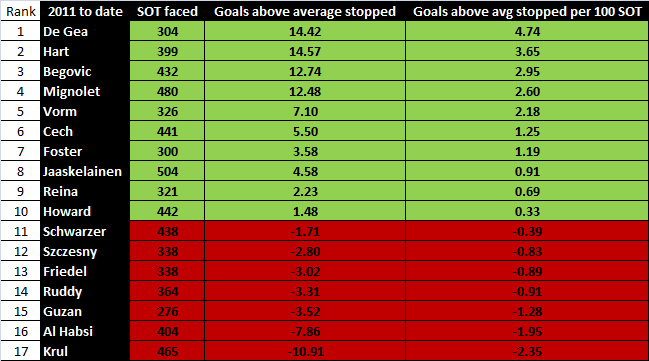 It raised a fair few comments about Tim Krul being so bad. We pointed out that Krul in fact would be top if we only included this season’s numbers. Large fluctuations in performance like this raise eyebrows amongst seasoned stattos and lead to questions. Is this measuring what it’s supposed to be measuring? Don’t large fluctuations demonstrate how random this is and how much luck is involved? How can a keeper look so terrible one year and so amazing the next?
For newcomers to this site – the above rankings are based on detailed shot locations – in essence measuring how difficult a shot is to save based on the angle and distance from goal.
As we said at the start, Ben Foster’s season at Birmingham wasn’t included in the table above. Well it’s been added now and this is how it looks:
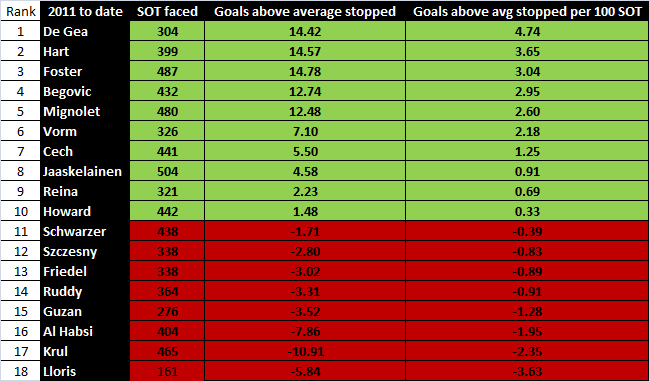 Foster gets bumped up to No 3 in the rankings. It’s a pretty huge jump. By these measures, Foster prevented 10 goals taht the average keeper would have let in that season. What we remember of Birmingham under Alex McCleish is an ultra defensive team. What we imagine is the defence helping out here, mass ranks of defenders pressurising attackers and making Foster’s job a lot easier. Here’s a video showing a chunk (around 25%) of Foster’s saves from that year:
It may well be that these saves have been cherry-picked by the video-maker who’s simply showed all the best ones. He may just have shown all the ones he’s got. We don’t know. What we do know is that the notion that Birmingham’s defensive pressure here is making these 50-odd saves a darn sight easier looks way off. Foster makes some stunning saves here from both close in and further out with defensive cover gone.
By our measures, Simon Mignolet had an even better season last year with Sunderland than Foster did with Birmingham. Again we picture Sunderland as a defensive team with cohorts of defenders behind the ball helping out their No 1. Here’s a reel of some of the Belgian’s saves from last season:
Again, these may have been cherry picked. However, we continue to question the notion that it’s defensive pressure causing these wild fluctuations in the performances we’re measuring. The intricacies of a keeper’s job – maintaining good footwork and positioning while focusing on the track of the ball and the shooter’s movement – is possibly (maybe THE) the hardest job in football.
For us, it’s rare for a keeper to continually do all these things immaculately throughout each game, let alone a full season. Many mistakes in these functions by keepers go unpunished through off target or blocked shots caused by a poor strike or defensive pressure.
However, once the shot has beaten a defender and is arrowing in on goal, it’s these elements of keeping that come into play. We are programmed to give all the credit to the striker for a goal. Keepers are rarely criticised unless it’s an obvious howler. ‘He’s been beaten on his near post, there,’ is often about as much as you get in most analysis. Pretty regularly, it’s a breakdown in the keeping process – poor footwork, poor positioning or poor anticipation of when the shot’s coming in that enables a goal to be scored. Sure credit the shooter, but try and discredit the keeper too. We’ll learn more about the game we love watching by doing so.
Follow us on Twitter here.

 Differentgame Analytics
Leave a comment